
N = 1
reconstructing synaptic mutations
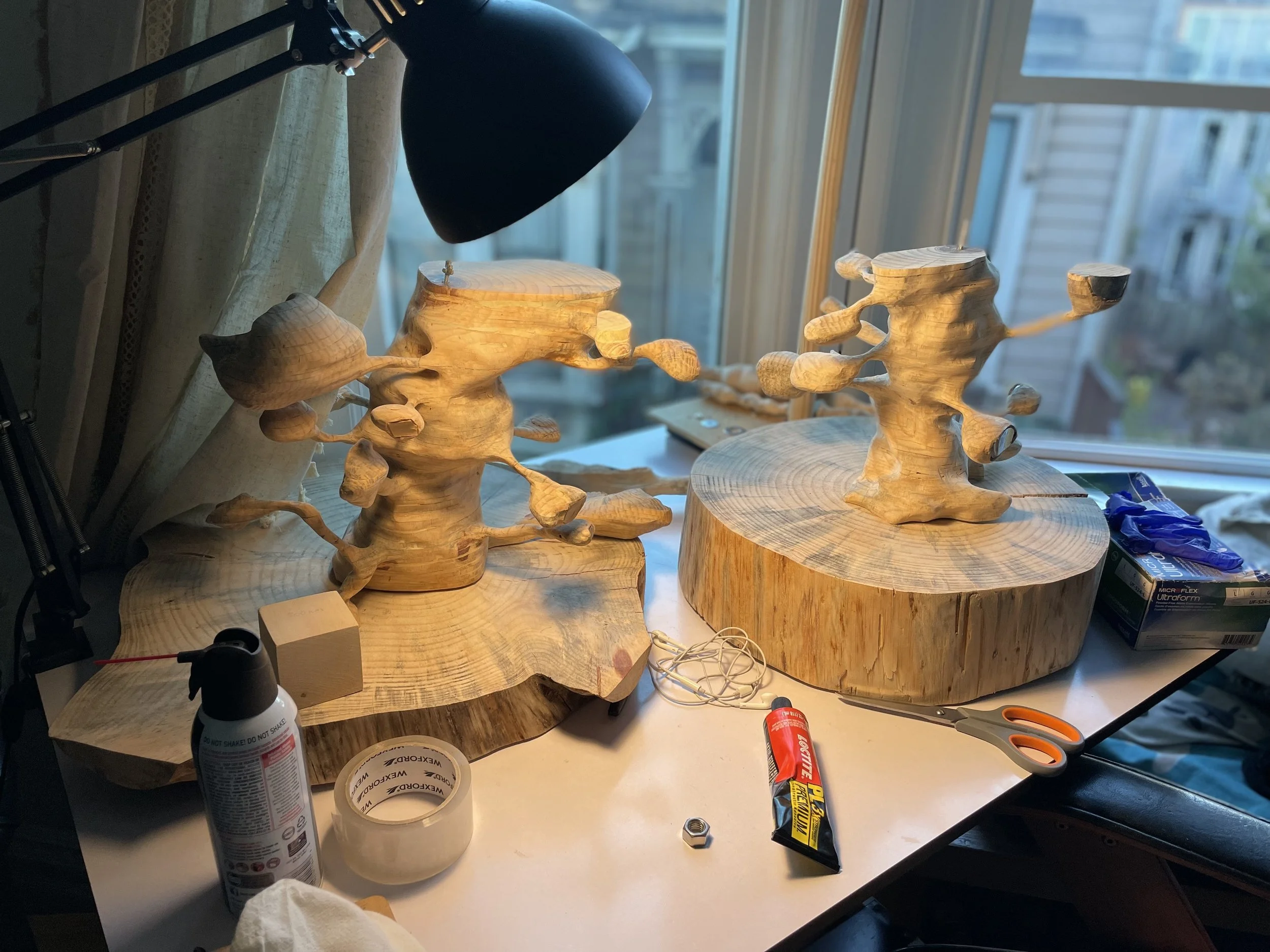
How do genetic mutations really impact the brain and body? I’ve recently been examining the effects of certain genetic mutations on the structure of synaptic connections in the mouse brain. Our work identified several interesting phenotypes and I felt compelled to investigate how these genetic effects may manifest in the shape of the brain. I decided to make two pieces side-by-side; one of the ‘wild-type’ form and one of the ‘mutant’ form. Can you guess which is which?
N=1
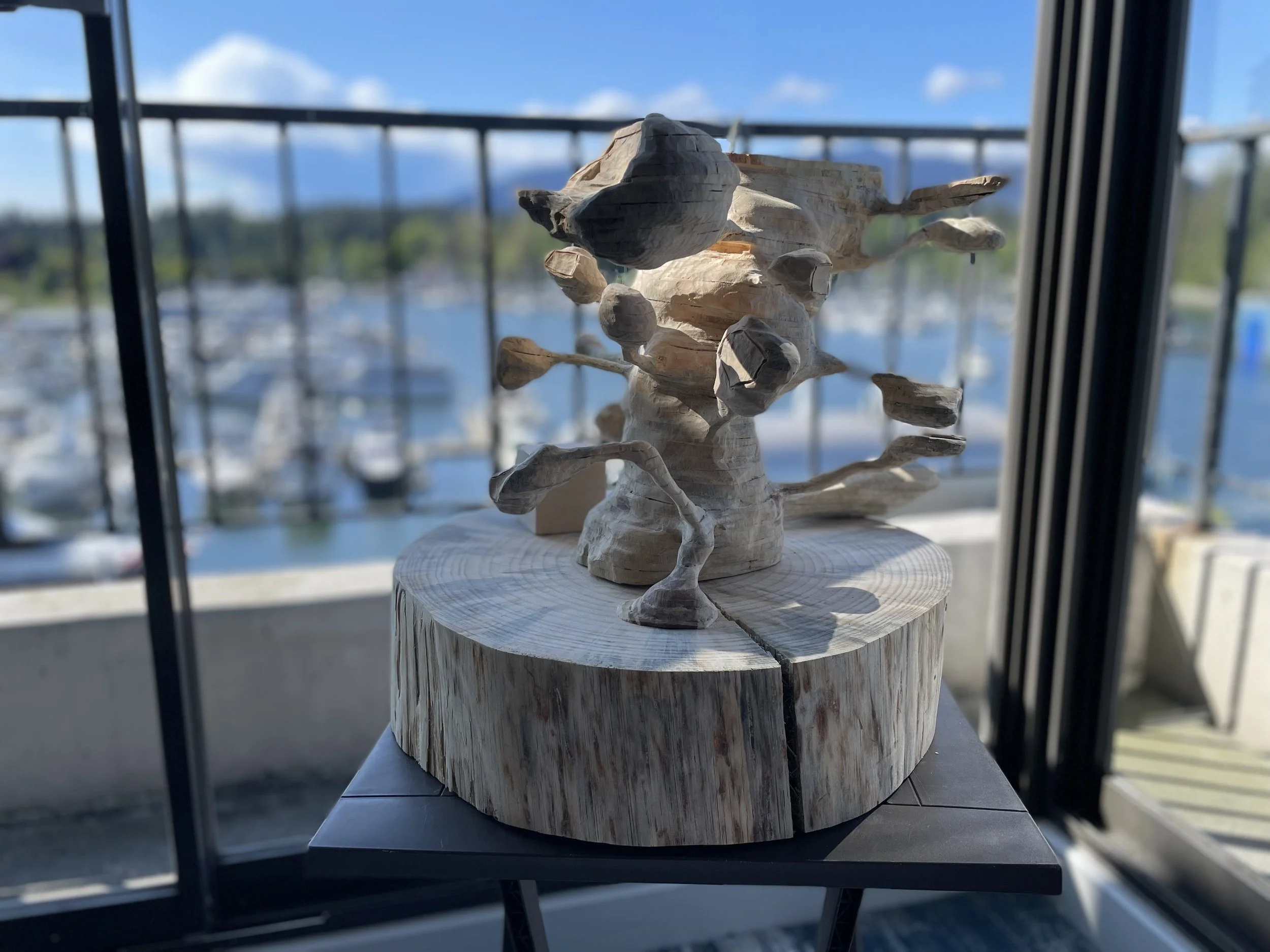
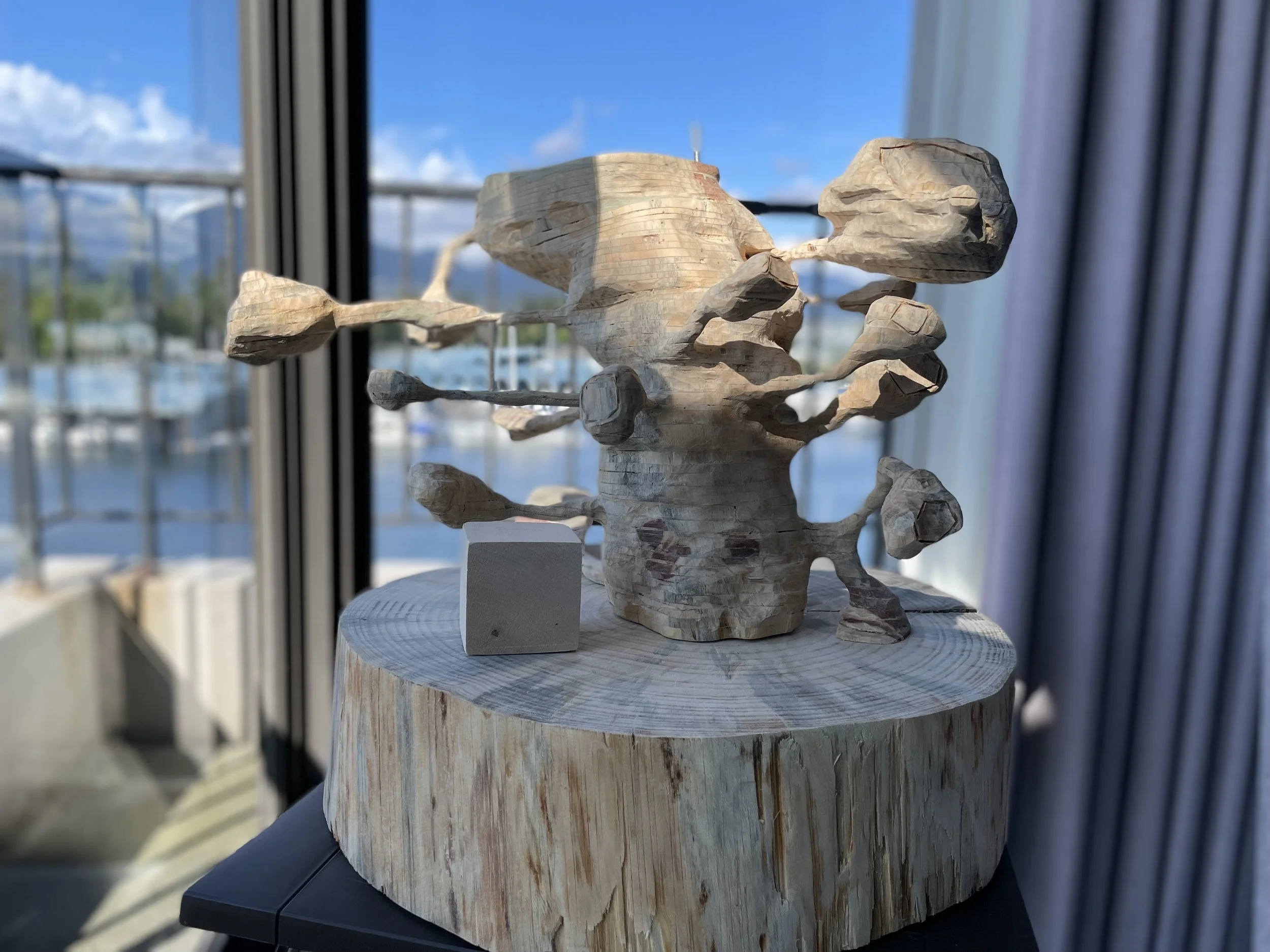
"Wild-type" in Vancouver
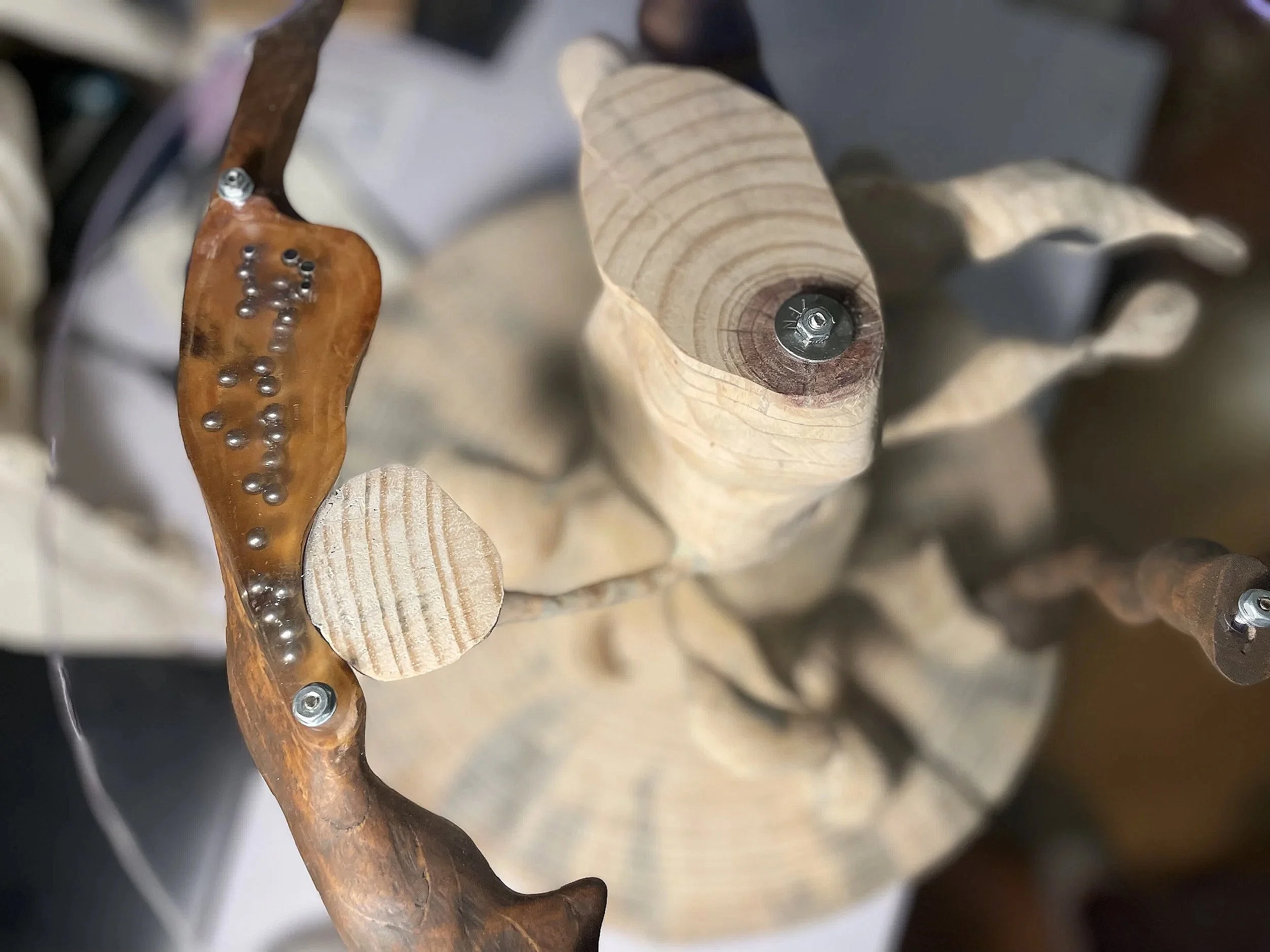
Presynaptic bouton with synaptic vesicles
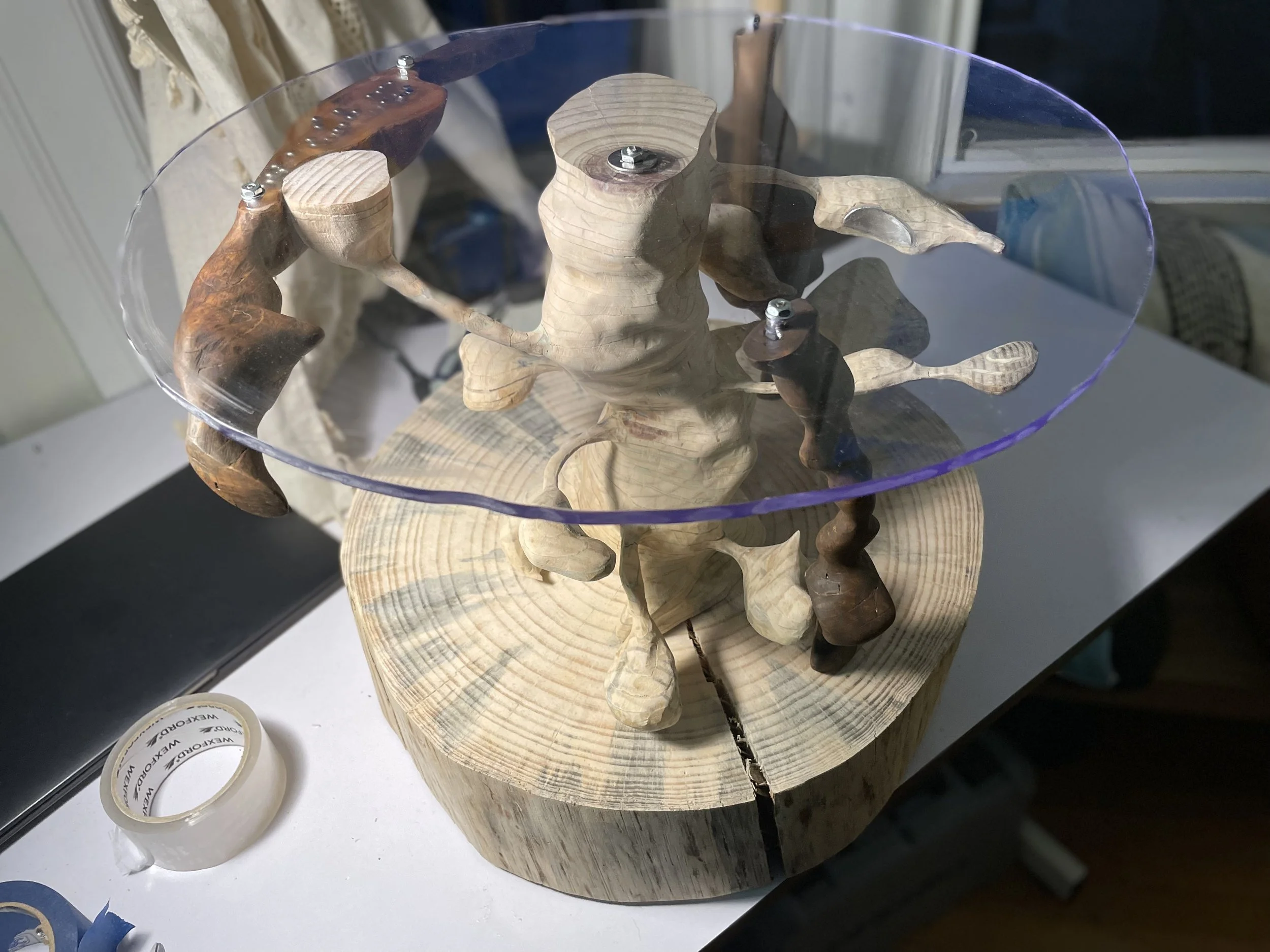
Fully assembled "Mutant"
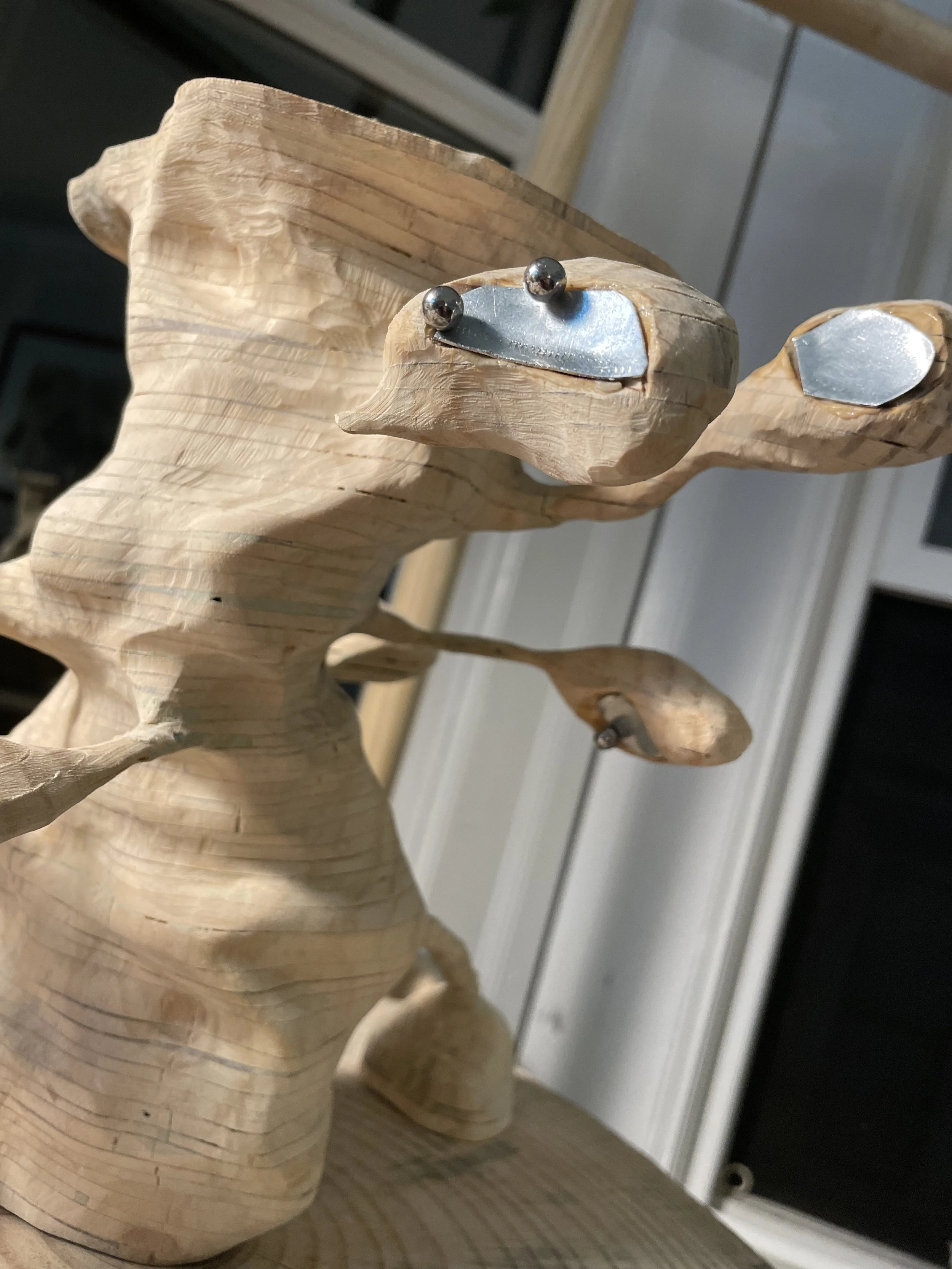
Postsynaptic densities with presynaptic docked vesicles
Canadian Association for Neuroscience Annual Meeting 2024
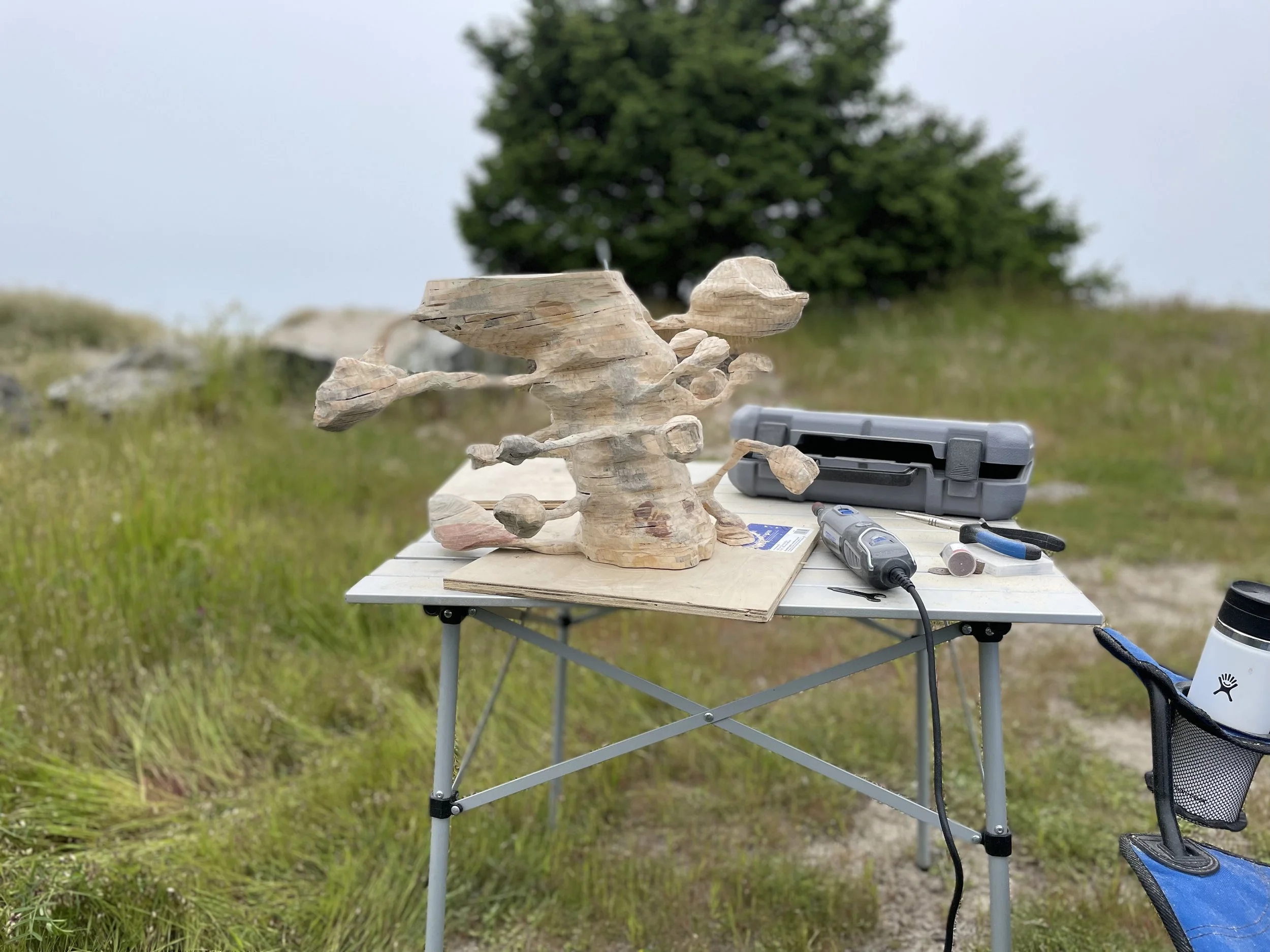
Sanding session in transit to CAN
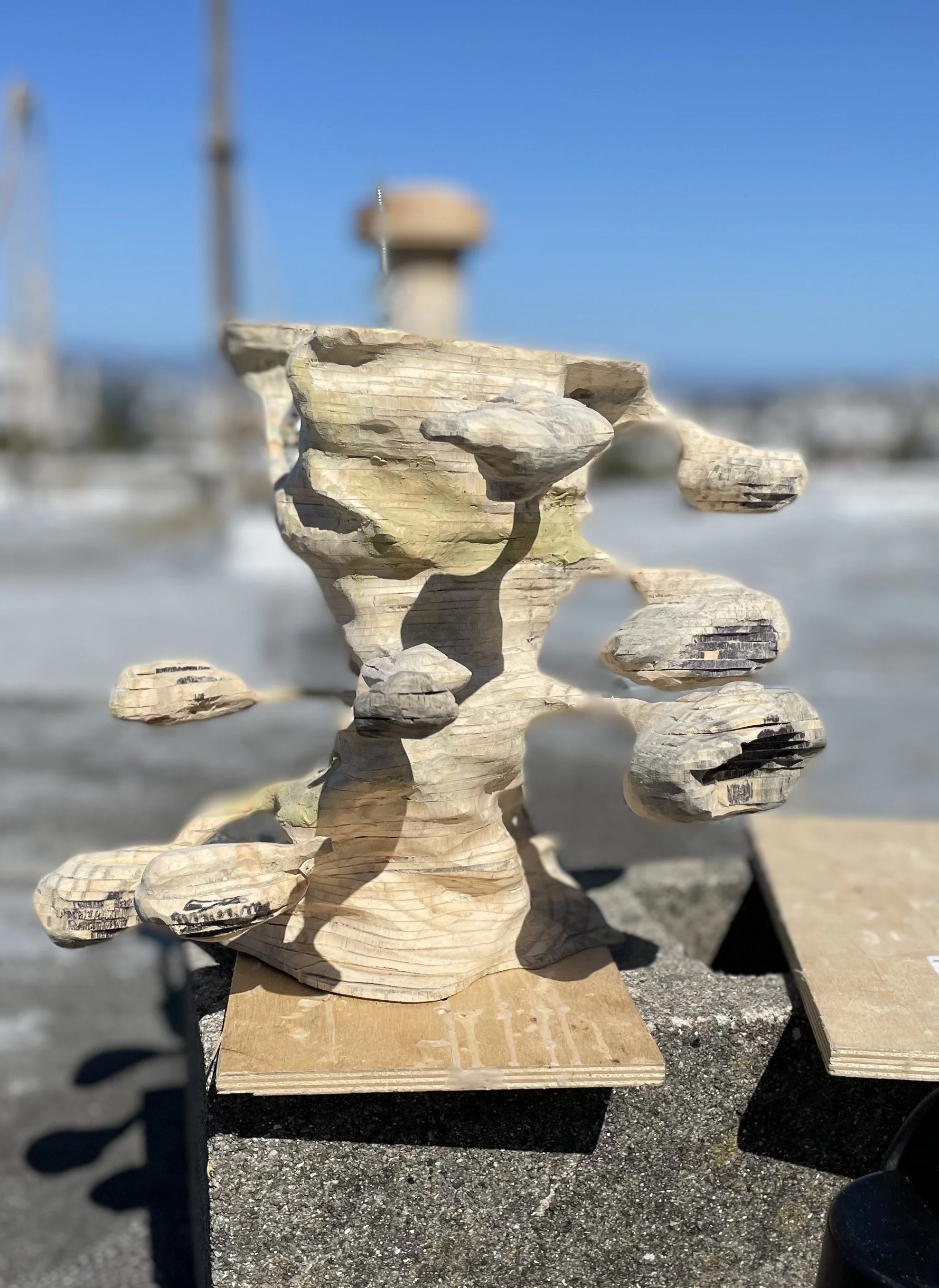
Sometimes I work on the roof
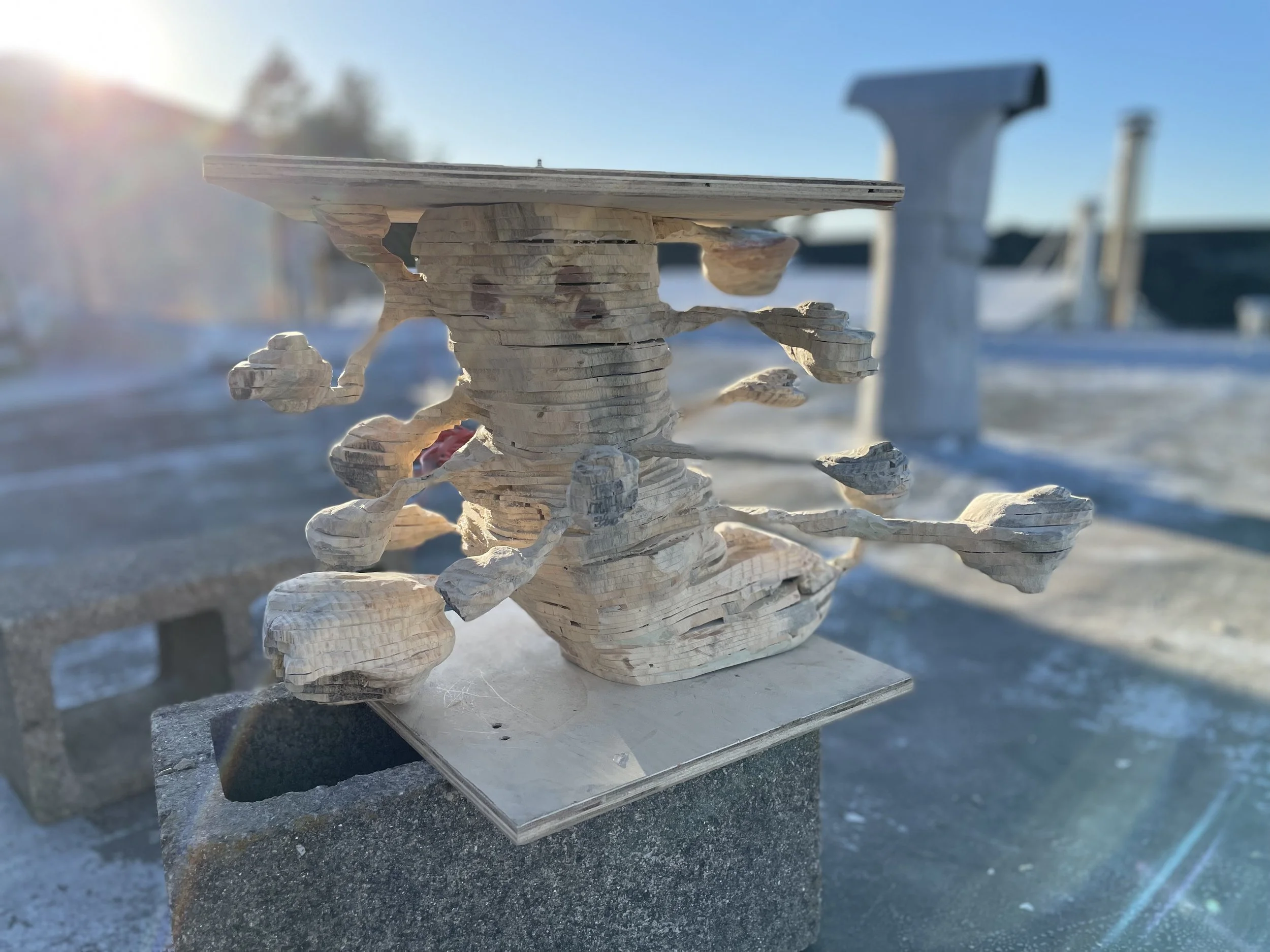
Rooftop sanding session
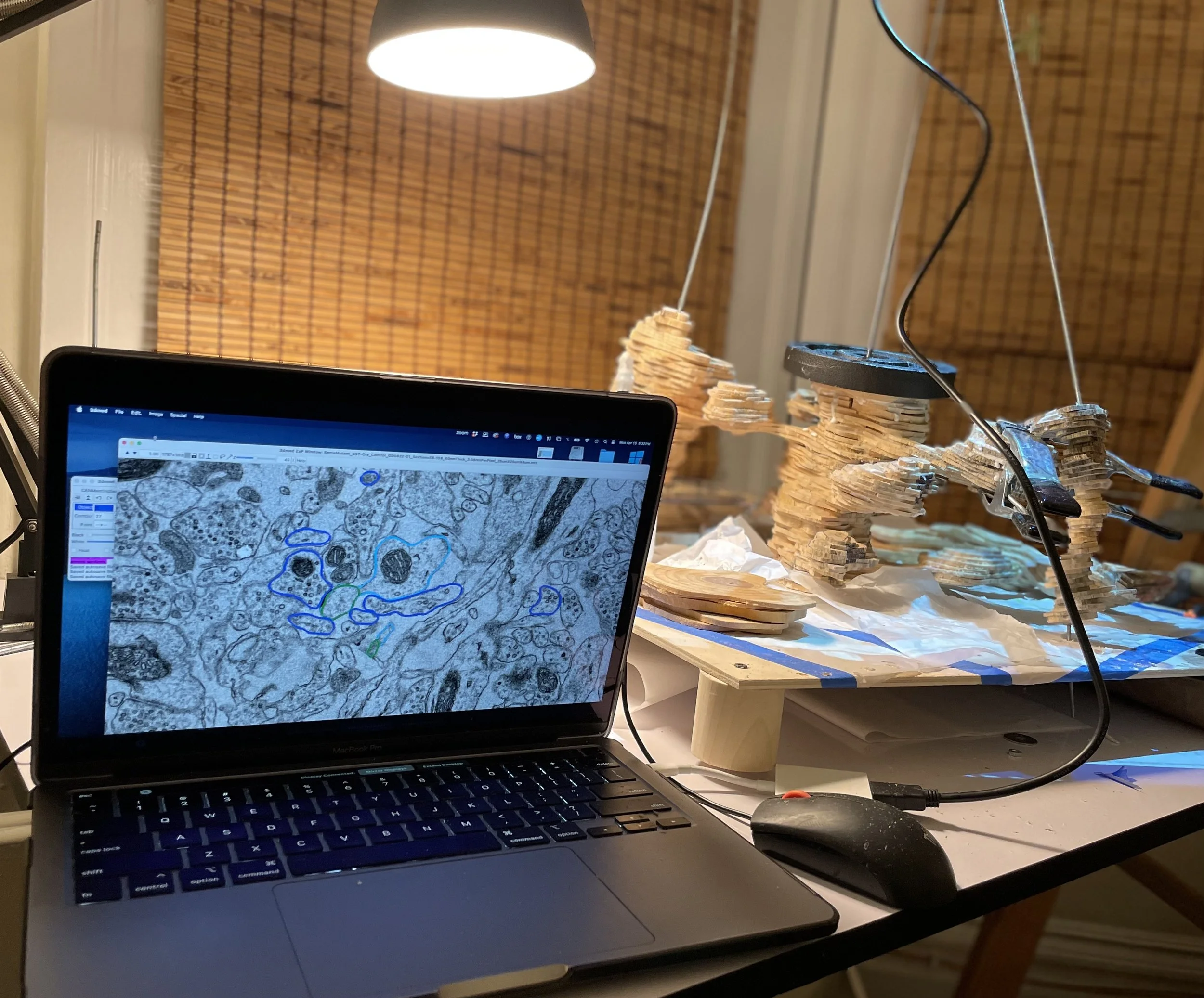
Overview of the desktop reconstruction process
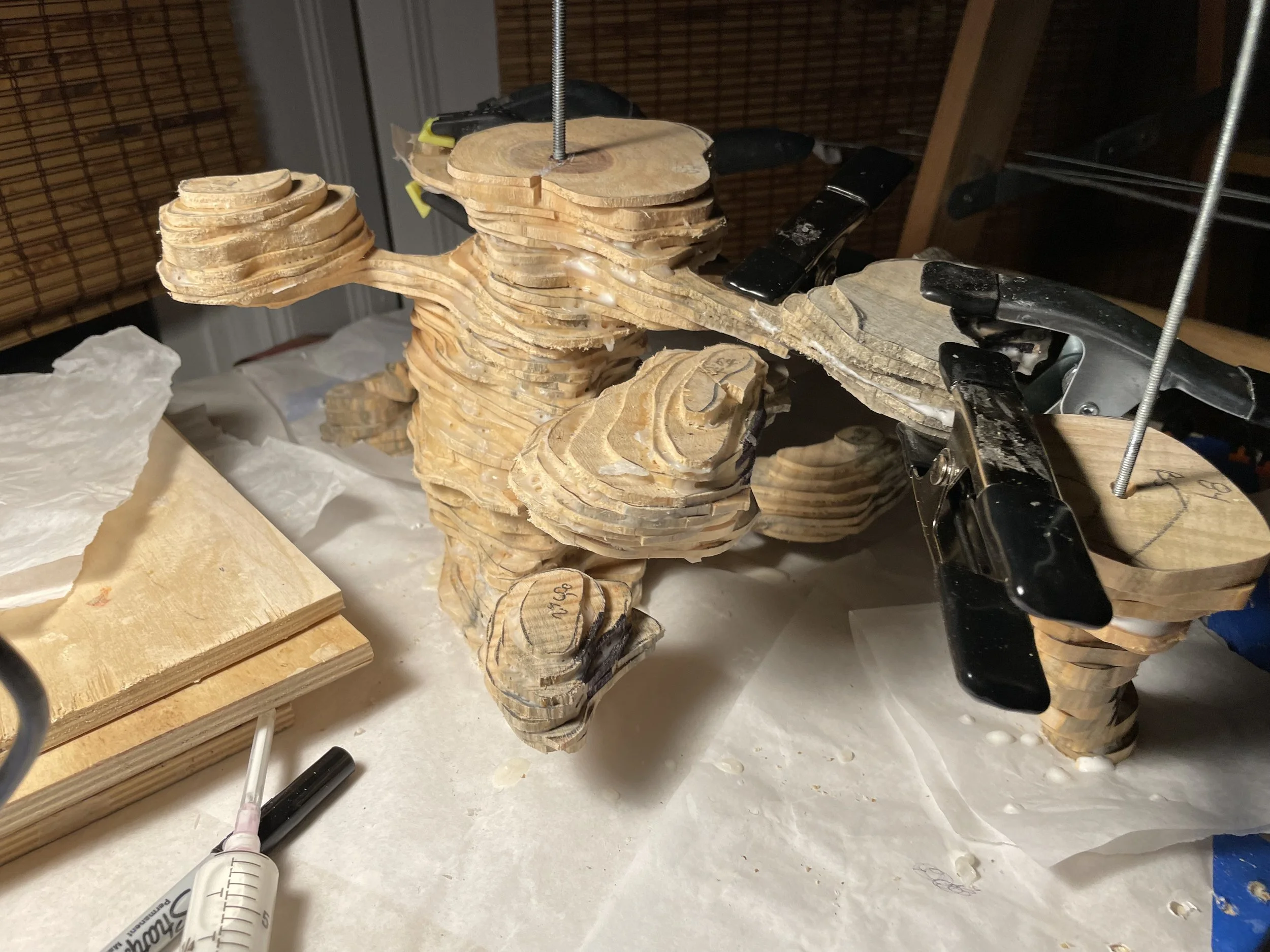
Reconstruction layer-by-layer
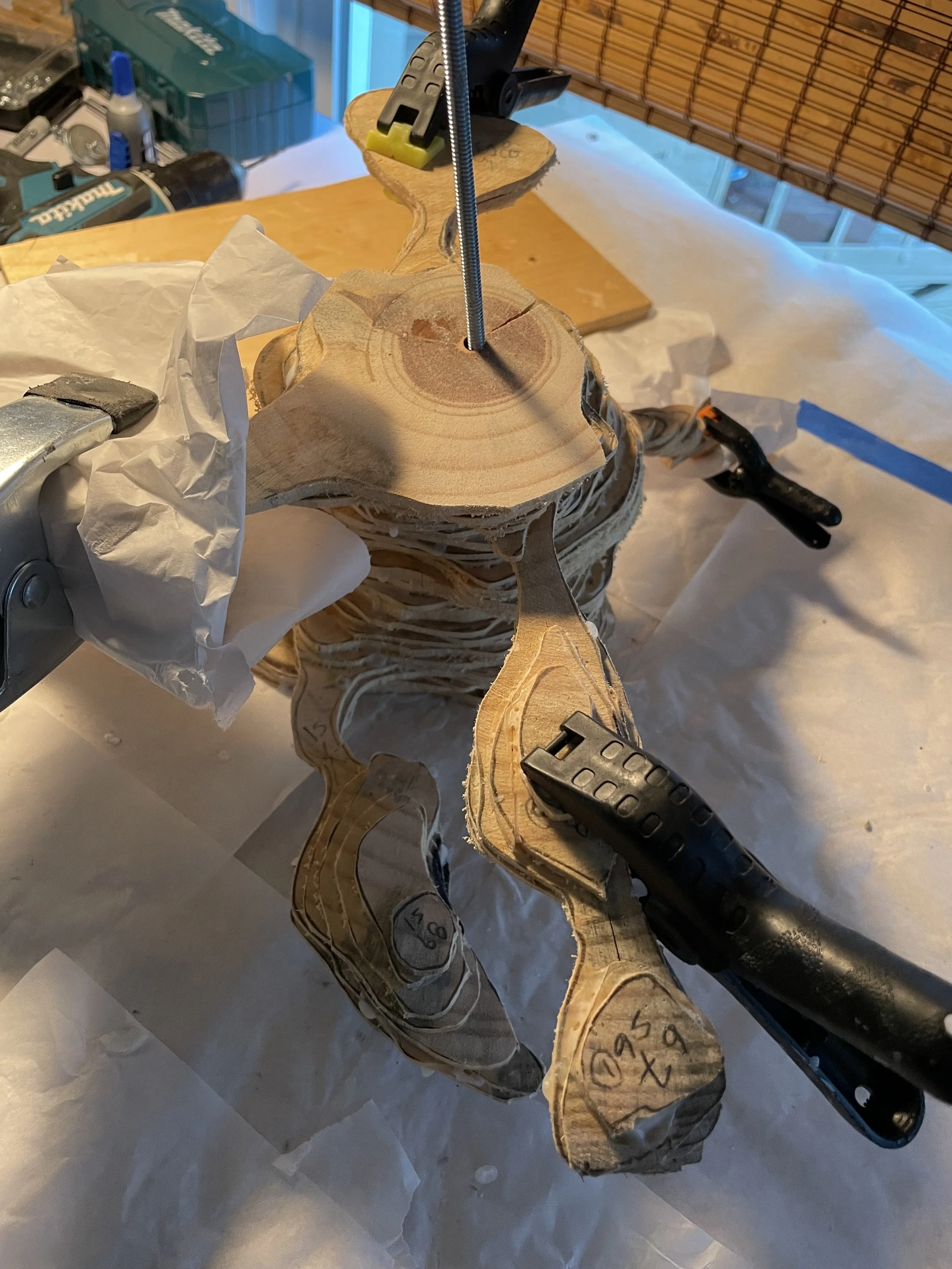
Gluing each slice back together
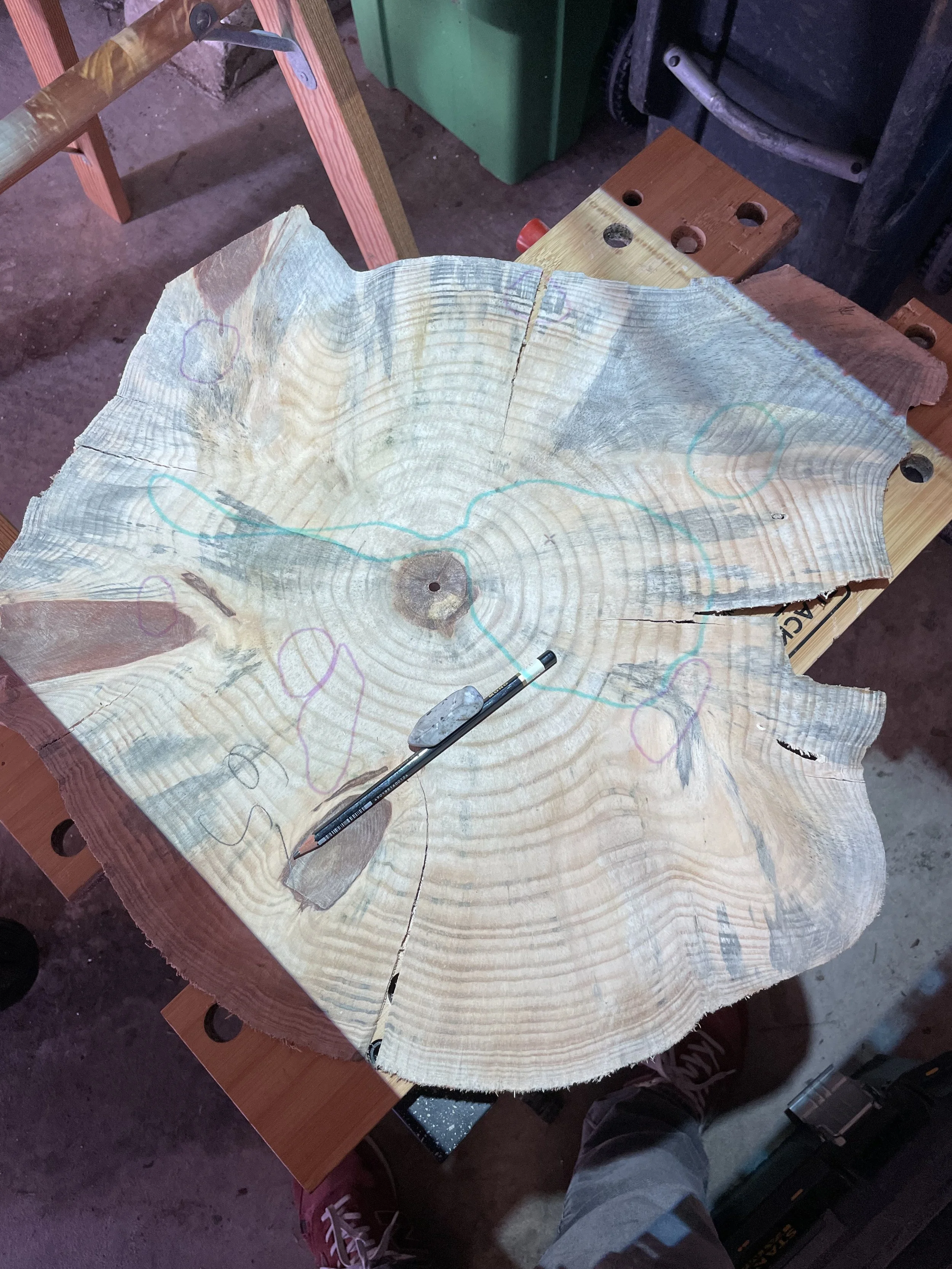
Projecting segmented contours onto sanded cookie
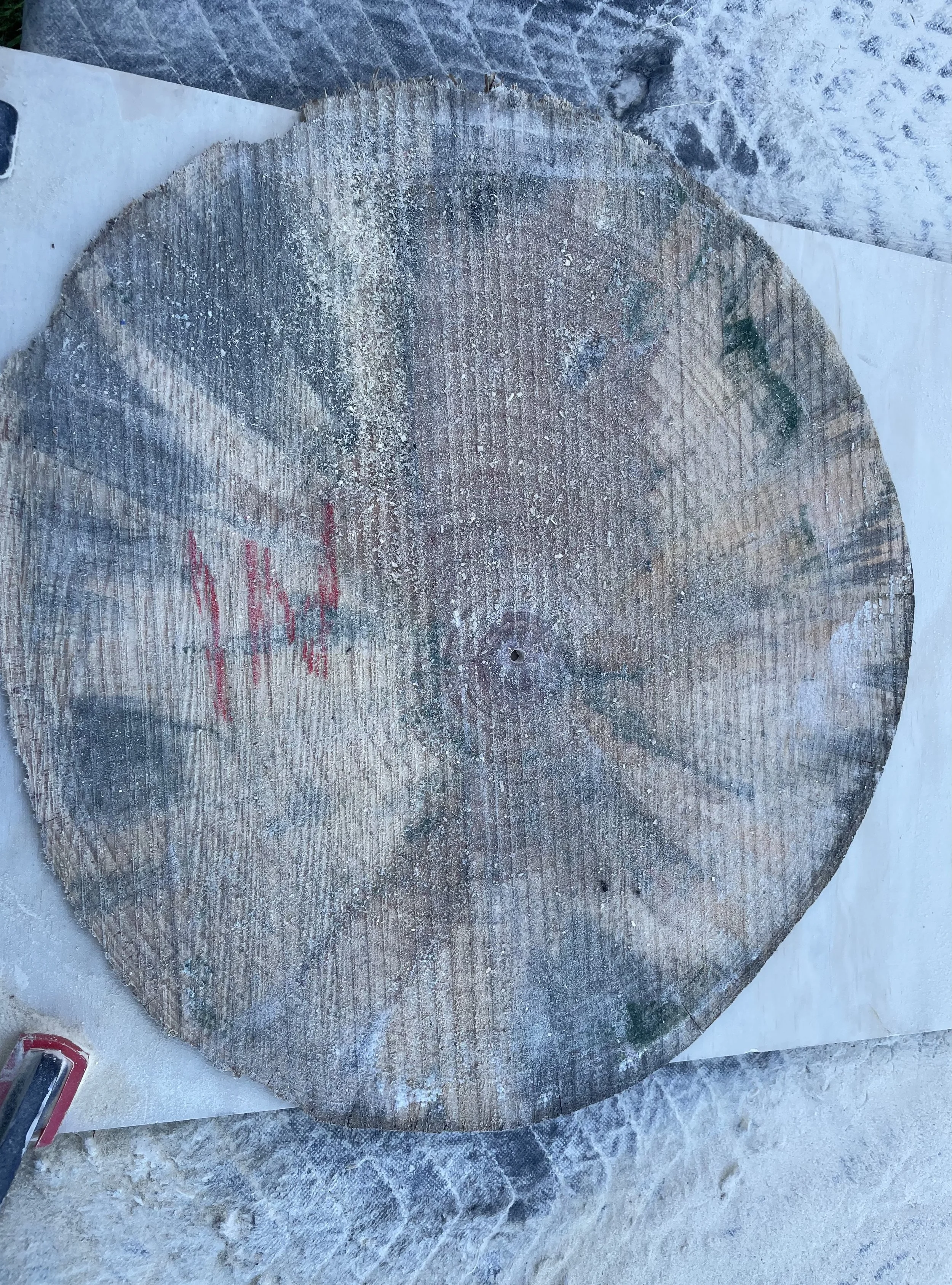
A cookie of salvaged Torrey pine
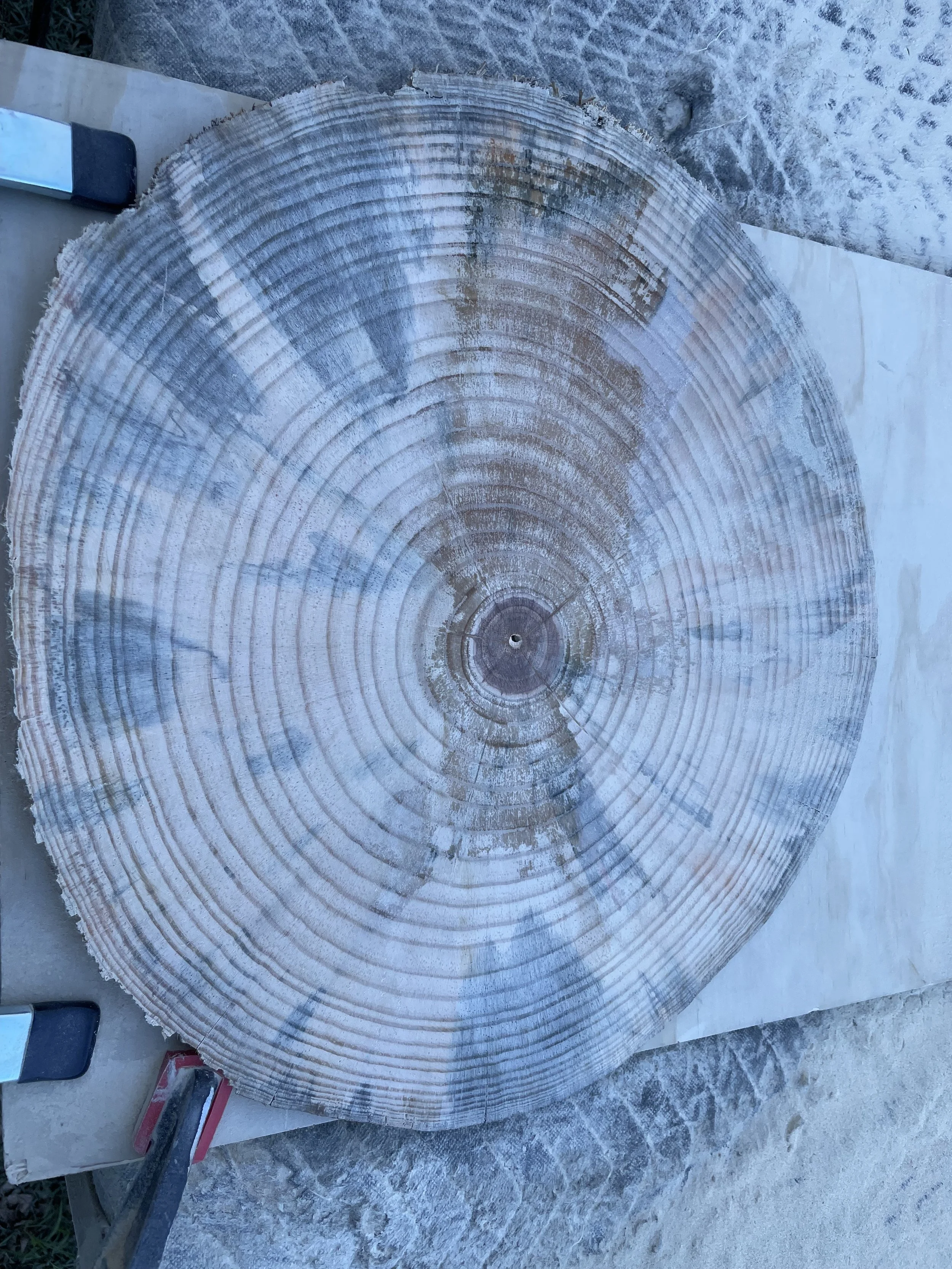
Sanded cookie
About the build
I sourced a single log of salvaged Torrey pine for this project from a sustainable sawmill outside San Diego and got them to slice it up into cookies for me. The tricky thing about slicing cookies is that you have to cut directly through the grain of the wood, which puts variable pressure on the saw blade and causes it to deflect as it cuts. In this case, this resulted in slices of slightly variable thickness. Since the overall scale factor is determined by slice thickness, this variability altered my ability to properly scale the piece, creating a slightly warped morphology. In this context, the title of the piece, N=1, reflects the important role of repetition in accurate representations.